Year of the Horse: Can Luxury Brands Win Back Chinese Shoppers?
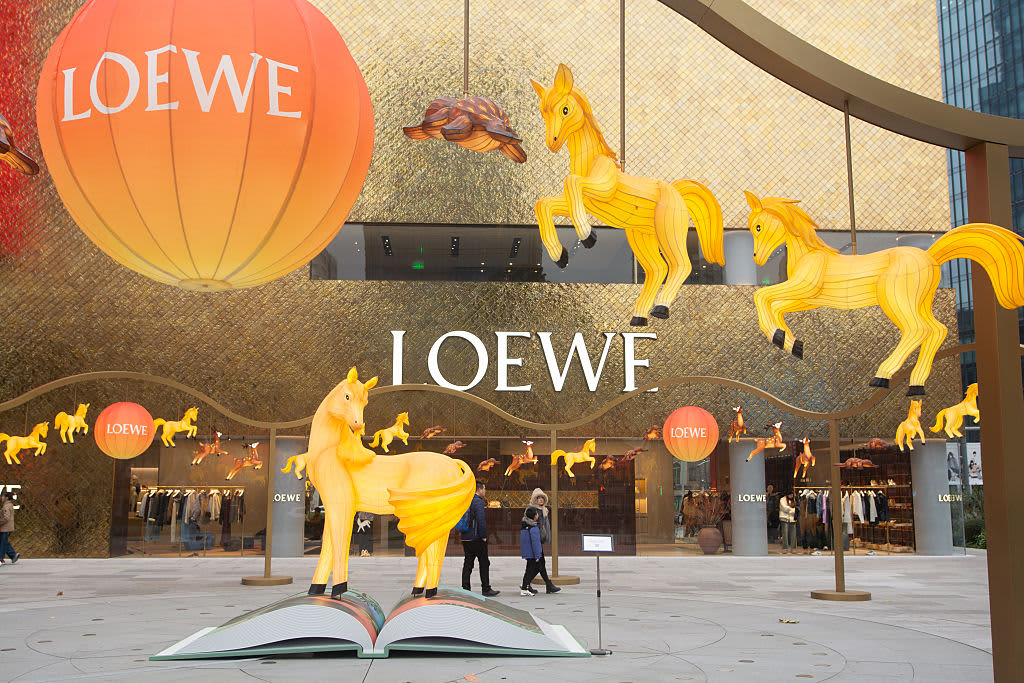
Luxury brands such as Harry Winston and Loewe are investing heavily in special collections for Lunar New Year to attract Chinese customers. As the Year of the Horse begins on Tuesday, many well-known Western brands are launching limited products inspired by the Chinese zodiac.
Harry Winston introduced a limited-edition rose gold watch priced at $81,500. The watch features diamond bezels and a red lacquer horse design. Fashion house Chloé also released a special capsule collection. It includes silk scarves priced at $250 and a snakeskin and leather shoulder bag costing $5,300, decorated with a horse head and tail connected by a horsebit chain. Other major brands such as Gucci and Loro Piana have launched bag charms with horse designs as well.
The Year of the Horse comes at a time when the luxury market in China is showing careful signs of recovery. In the past, Chinese consumers were the main force behind global luxury sales. However, in recent years, spending has slowed because of China’s weaker economy and problems in the housing market.
According to estimates from Bain & Company, China’s luxury market was worth about 350 billion RMB (around $50 billion) in 2024. The firm expects the market to shrink by 3% to 5% in 2025. Still, analysts say that the second half of 2025 showed improvement, supported by a stronger stock market and growing consumer confidence.
Luca Solca, a senior analyst at Bernstein, believes that Chinese luxury spending will stabilize and grow by a mid-single-digit percentage in 2026. However, he also points out that the market is much more competitive than before. Before the Covid-19 pandemic, Chinese buyers represented about one-third of the global luxury market. Today, that share has fallen to around 23%.
Although Lunar New Year is not the only factor influencing luxury sales, it gives Western brands a chance to show respect for Chinese culture. The holiday is traditionally linked with the colors red and gold, which symbolize luck and wealth. Each year is connected to one of 12 zodiac animals. Last year was the Year of the Snake.
However, experts warn that brands must do more than simply use zodiac symbols. Solca explains that Chinese consumers are no longer easily impressed by Western brands. Simple or superficial designs based only on zodiac animals are unlikely to succeed.
Veronique Yang from Boston Consulting Group says that literal interpretations of zodiac animals can seem lazy or even disrespectful. Younger Chinese consumers want modern and creative interpretations of traditional culture. They respect tradition but also want it presented in a fresh way.
In the early 2010s, Lunar New Year collections became popular as Western brands tried to benefit from China’s fast-growing luxury market. At that time, wealthy Chinese shoppers were eager to buy designer goods, especially while traveling abroad. Today, luxury boutiques are widely available across China, and customers have many more choices.
Chinese high-income consumers have also become more experienced and demanding. They have traveled globally, visited top restaurants, and shopped in the best stores. As a result, their expectations are much higher than before.
Spending habits have also changed since the pandemic. In 2019, about two-thirds of Chinese luxury purchases were made overseas. Last year, only one-third of spending happened abroad.
Some brands are taking more creative approaches. For example, Loewe decorated its Puzzle bags with fringes and tassels in a cowboy style rather than using obvious horse images. Meanwhile, Valentino organized a three-day lantern festival at Tianhou Palace in Shanghai, and Burberry launched a large campaign with Chinese ambassadors and a pop-up store in Beijing.
Experts agree that successful brands must build meaningful cultural stories, not just focus on zodiac animals. To win over Chinese customers today, creativity, authenticity, and cultural understanding are more important than ever.