Japanese Prime Minister resigns after election losses
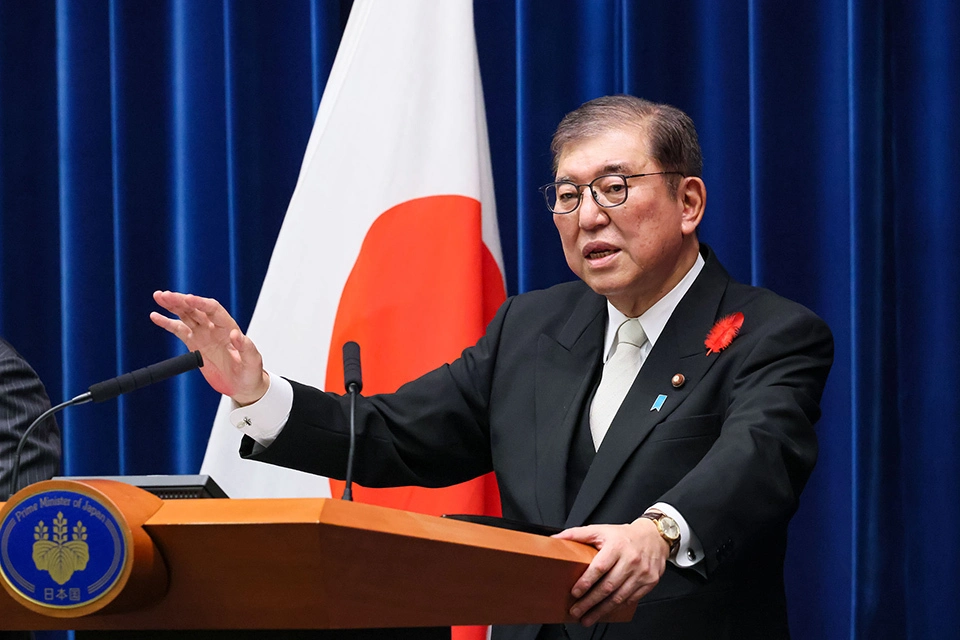
Japanese Prime Minister Shigeru Ishiba announced his resignation on Sunday, triggering political uncertainty at a delicate time for Japan’s economy.
At 68, Ishiba has asked his ruling Liberal Democratic Party (LDP) to hold an emergency leadership election, saying he will remain in office until a successor is chosen. His resignation follows a series of electoral defeats that saw his coalition lose control of both houses of parliament, largely due to public discontent over rising living costs.
Despite pressure to step down after the LDP’s poor performance in July’s upper house vote, Ishiba had focused on completing a trade agreement with the United States, aimed at easing tensions over tariffs that have hurt Japan’s automotive sector.
With the trade deal finalized and U.S. President Donald Trump having signed the related executive order, Ishiba said it was time to hand over power, suggesting a generational shift. Financial markets reacted nervously to the uncertainty, with Japan’s currency and government bonds hit hard, and the 30-year bond yield reaching a record high.
Speculation about Ishiba’s resignation had intensified after the LDP scheduled a vote on whether to hold an extraordinary leadership election.
Potential successors include Sanae Takaichi, who favors expansionary fiscal and monetary policy and opposes recent interest rate hikes, and Shinjiro Koizumi, a prominent minister known for addressing price inflation. Takaichi had lost narrowly to Ishiba in the previous leadership contest, while Koizumi is viewed as a stabilizing figure unlikely to pursue radical change.
However, since the LDP no longer holds a majority in either house, it is not certain that the next party leader will automatically become prime minister. Analysts suggest the new leader might call a snap election to seek public support, although a Kyodo news agency poll showed that 55% of respondents oppose such a move.
Meanwhile, the far-right Sanseito party’s gains in the recent election have added a new dynamic to Japan’s political landscape. Ishiba’s final act as leader was securing a U.S. trade deal that included $550 billion in Japanese investments in exchange for reduced tariffs.